
study body language
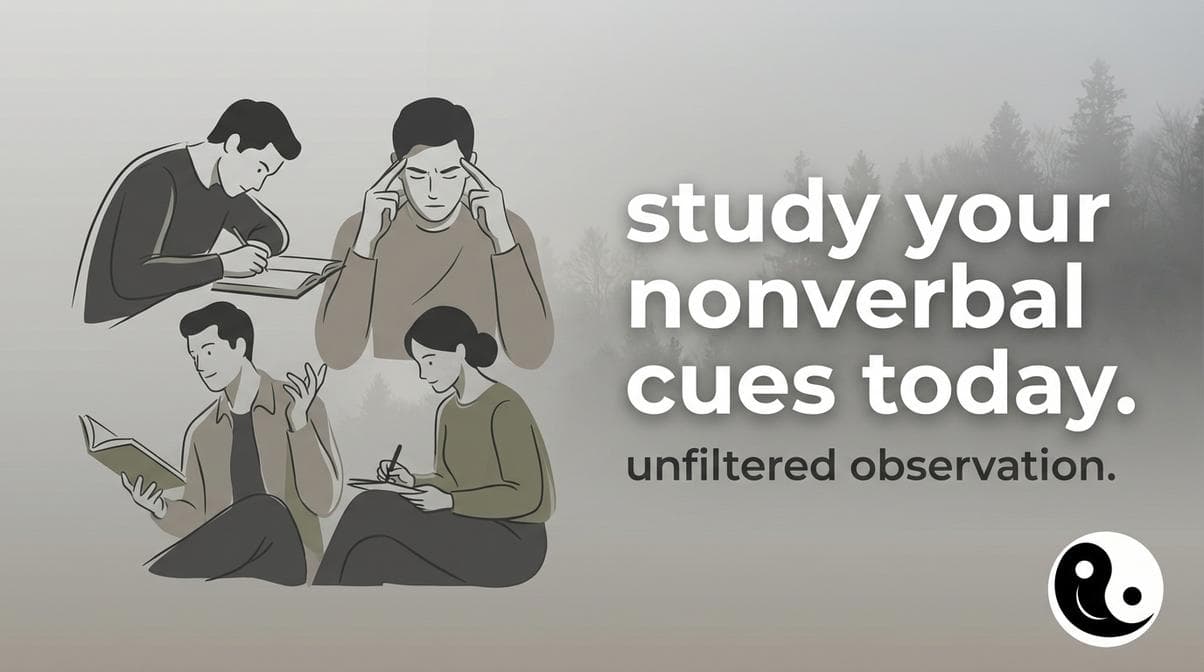
you're listening to what people say. that's your first mistake.
research suggests that up to 93% of communication is nonverbal. that means the words coming out of someone's mouth are the least reliable part of what they're telling you.
why your ears aren't enough
think about the last time someone said "i'm fine" while their arms were crossed, jaw was tight, and they wouldn't make eye contact. you knew they weren't fine. you didn't need the words — your gut read the body.
that gut feeling? it's your brain processing thousands of nonverbal signals faster than your conscious mind can catalog them. the problem is most people ignore that signal in favor of the spoken word.
stop doing that.
the basics that change everything
you don't need a psychology degree. start with these fundamentals:
eye contact: someone who maintains steady (not staring) eye contact is generally engaged and confident. rapid blinking or looking away often signals discomfort or deception.
posture: open posture (uncrossed arms, facing you directly) means receptivity. closed posture means they're protecting themselves — physically or emotionally.
micro-expressions: those split-second facial movements that flash before someone composes their "real" expression. a brief grimace before a smile. a flicker of contempt. these are the truth leaking out.
mirroring: when someone unconsciously copies your posture or gestures, they're in rapport with you. when they don't, there's a disconnect.
put it into practice
next conversation you have, spend more energy watching than listening. notice where someone's feet are pointed — that's where they actually want to go. watch their hands. are they touching their face? that often signals anxiety or self-soothing.
you're not trying to become a human lie detector. you're trying to understand people beyond the surface level — to catch what they're really feeling beneath the social performance.
the real advantage
when you can read a room before a word is spoken, you navigate life differently. negotiations, relationships, job interviews — everything shifts when you understand the language that everyone speaks but almost nobody studies.
if this resonated, share it with someone who needs to hear it.