
cognitive biases
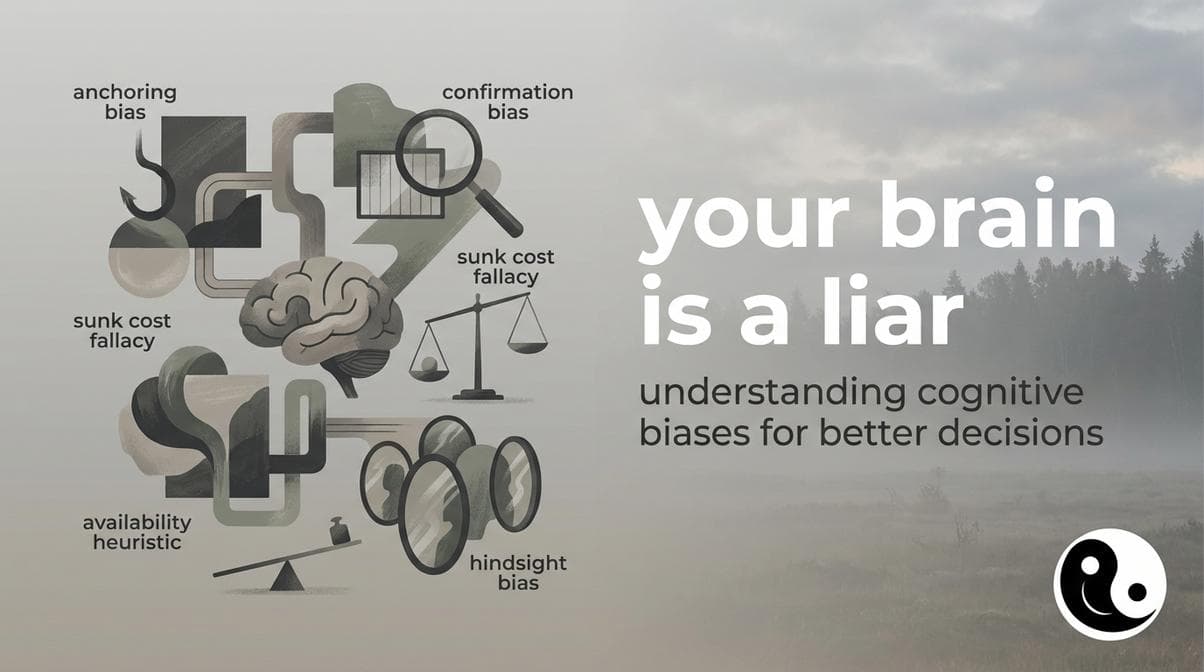
you think you're rational. you're not. nobody is. your brain runs on shortcuts that were useful for surviving on the savannah but are absolutely terrible for navigating modern life. the sooner you learn these blind spots, the sooner you can stop being manipulated — by others and by yourself.
your brain's cheat codes
charlie munger, warren buffett's business partner, compiled a list of 25 cognitive biases that consistently distort human thinking. these aren't rare glitches — they're the default operating system of your mind.
confirmation bias: you seek out information that agrees with what you already believe. loss aversion: you feel losses twice as intensely as equivalent gains. anchoring: the first number you hear disproportionately influences your judgment. sunk cost fallacy: you keep investing in bad decisions because you've already invested so much.
you're doing all of these. every single day.
why this matters more than you think
every bad decision you've made has a cognitive bias behind it. stayed in that relationship too long? sunk cost fallacy. bought something you didn't need because it was "on sale"? anchoring. ignored warning signs about a friend? halo effect.
once you learn to spot these patterns, you can't unsee them. and that awareness — even if it doesn't eliminate the bias — gives you a moment of pause before you act on autopilot.
the munger method
munger doesn't just know these biases exist. he actively checks himself against them before making major decisions. he inverts problems, seeks disconfirming evidence, and assumes he's wrong until proven right. that's the opposite of how most people operate.
start your education
look up munger's list of 25 cognitive biases. read through each one. for every bias, think of a time it affected your own decision-making. this isn't about becoming perfectly rational — that's impossible. it's about being less wrong, less often.
if this resonated, share it with someone who needs to hear it.