
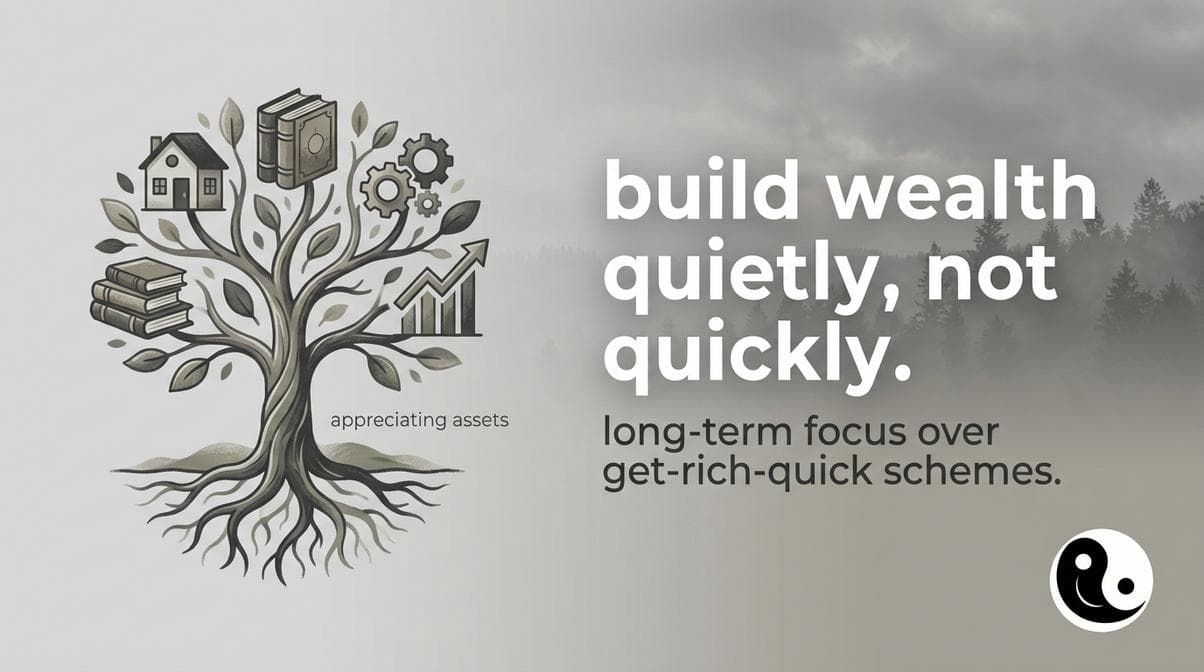
invest in appreciating assets
looking rich and being rich are opposite strategies
here's the paradox nobody talks about: the people who look the wealthiest are often the least wealthy. the $80,000 car, the designer wardrobe, the luxury apartment — these are all depreciating assets or pure expenses. they drain your net worth while creating the illusion of prosperity.
meanwhile, the actual millionaire next door drives a used toyota and puts the difference into investments that grow while they sleep.
depreciating vs. appreciating assets
a depreciating asset loses value over time. a new car loses 20-30% of its value in the first year alone. designer clothes, electronics, most physical possessions — they're all worth less tomorrow than they are today.
an appreciating asset gains value over time. equities (stocks), index funds, real estate, businesses — these tend to grow in value and often generate income along the way through dividends or rent.
the math is brutally simple: every dollar you spend on something that loses value is a dollar that could have been invested in something that gains value. over decades, this difference compounds into life-changing amounts.
the power of compound growth
let's say you're deciding between a $40,000 new car and a $15,000 reliable used car. the $25,000 difference, invested in a broad market index fund averaging 8% annual returns:
- in 10 years: ~$54,000
- in 20 years: ~$116,000
- in 30 years: ~$251,000
one decision. a quarter million dollars. that's not theory — that's basic compound math.
and the index fund doesn't just sit there growing. many pay regular dividends — passive income that shows up in your account while you do literally nothing.
how to shift your thinking
- before any major purchase, ask: will this be worth more or less in 5 years?
- buy used when possible — let someone else eat the depreciation
- automate investments — set up recurring contributions to index funds so it happens without willpower
- redefine "expensive" — the truly expensive thing isn't the investment that costs money today. it's the consumption that costs you wealth tomorrow
stop optimizing for appearance. start optimizing for freedom.
if this resonated, share it with someone who needs to hear it.