
antifragile
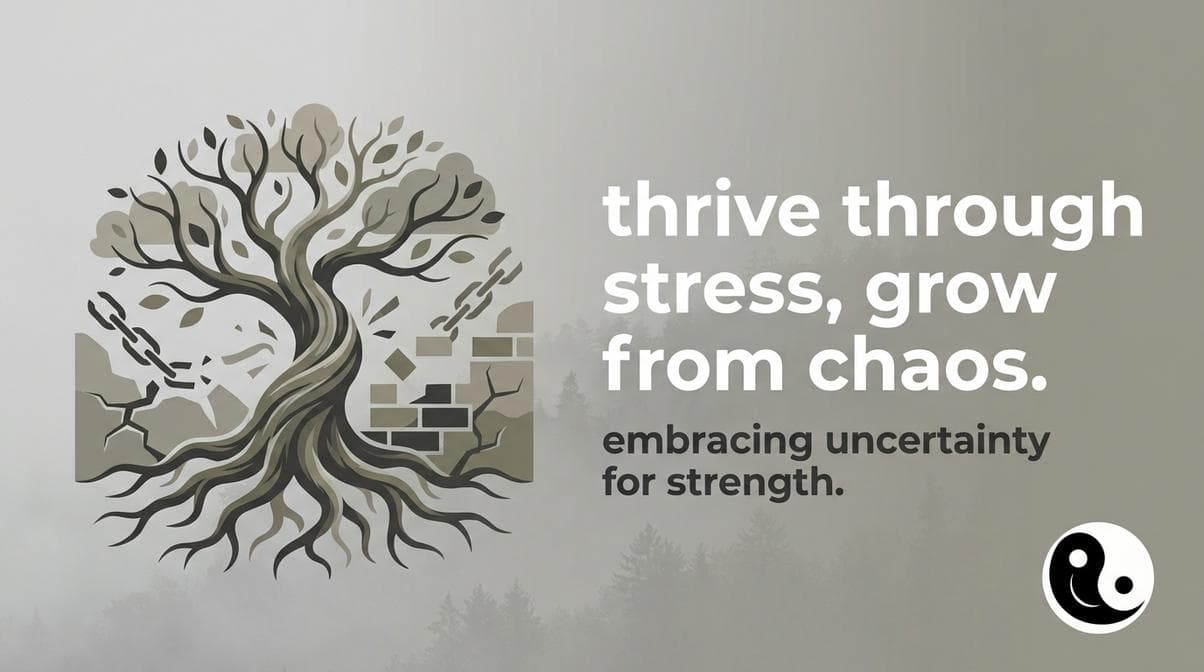
you've been taught to avoid risk, minimize chaos, and build stable systems. what if that entire strategy is making you weaker? nassim taleb introduced a concept that doesn't even have a word in most languages: antifragility — things that benefit from disorder.
beyond resilience
most people aspire to be resilient — to take a hit and bounce back. that's fine, but it's not enough. antifragile systems don't just survive shocks, they need them. your muscles are antifragile: stress them and they grow stronger. your immune system is antifragile: exposure to germs builds defenses.
your comfort zone? that's fragile. it breaks at the first sign of chaos.
small risks, big payoffs
taleb's key insight is about asymmetry. take many small risks where the downside is limited but the upside is potentially massive. ask for the raise — worst case, they say no. start the side project — worst case, you learn something. approach the stranger — worst case, an awkward moment that nobody remembers.
the pattern is clear: the cost of inaction almost always exceeds the cost of trying and failing. but your brain doesn't calculate it that way because evolution wired you to overweight losses.
build disorder into your routine
eat different foods. take different routes to work. talk to people outside your circle. change your workout. read books from genres you'd normally ignore. each small disruption is a microdose of chaos that builds your capacity to handle bigger disruptions when they inevitably arrive.
the person who has handled a hundred small surprises doesn't panic when a big one hits. the person who has avoided all discomfort crumbles.
embrace the chaos
stop trying to eliminate uncertainty from your life. start treating it as training. read taleb's antifragile if you want the full framework, but the core message is simple: the things that try to kill you can make you stronger — if you're structured to benefit from them.
if this resonated, share it with someone who needs to hear it.