
acknowledge human ignorance
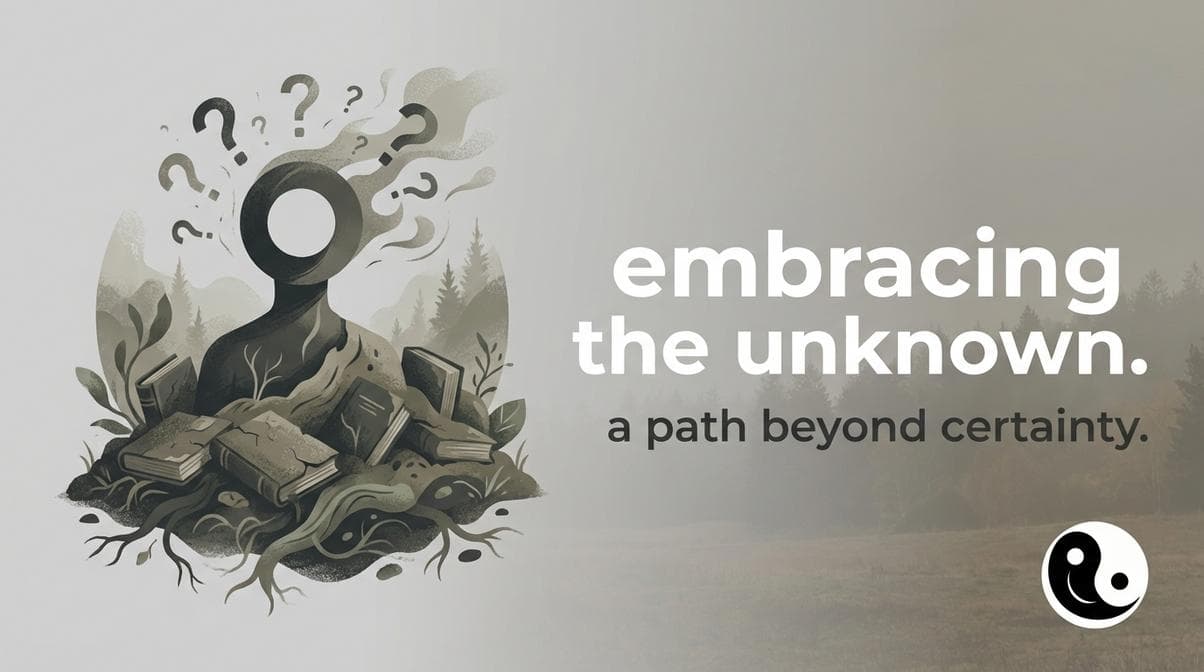
for centuries, every educated person on earth knew the sun revolved around the earth. they were certain. it was obvious. anyone who suggested otherwise was a lunatic.
they were all wrong.
newton's laws of gravity were considered the final word on physics for over 200 years. then einstein came along and proved they were incomplete. the "settled science" was unsettled.
this pattern repeats endlessly throughout human history. and you're not immune to it.
the arrogance of certainty
right now, you hold beliefs you consider absolutely, unshakably true. political beliefs. spiritual beliefs. beliefs about how the world works, what makes people tick, and what's possible. you'd bet your life on some of them.
history suggests you're probably wrong about at least a few.
this isn't an attack on your intelligence. it's an observation about the fundamental nature of human knowledge. we don't know what we don't know. and the things we're most certain about are often the things we're most dangerously wrong about, because certainty prevents investigation.
the intellectual humility experiment
try this: pick one belief you hold with absolute conviction. something you'd argue passionately about at a dinner party. now, genuinely try to argue the opposite position. not as a debate exercise - actually try to understand why someone intelligent and well-intentioned would disagree with you.
if you can't construct a compelling counter-argument, that's not evidence that you're right. it's evidence that you haven't tried hard enough to understand the other side.
what certainty costs you
when you're certain, you stop learning. your brain filters out information that contradicts your existing beliefs and amplifies information that confirms them. this is confirmation bias, and it's operating in your mind right now on every topic you feel strongly about.
the smartest people in any room aren't the most certain ones. they're the ones who hold their beliefs loosely, update them frequently, and say "i don't know" without embarrassment.
the practice
cultivate the habit of adding "...but i could be wrong" to your strongest opinions. not out loud necessarily, but internally. this small mental addendum keeps the door open for new information and prevents your beliefs from calcifying into dogma.
the goal isn't to believe nothing. it's to hold beliefs the way a scientist holds hypotheses - provisionally, pending better data, and always subject to revision.
what are you certain about right now? sit with that certainty for a moment. then remember that every generation before you was certain about things that turned out to be laughably wrong.
if this resonated, share it with someone who needs to hear it.